
The Winner is… Tofu!
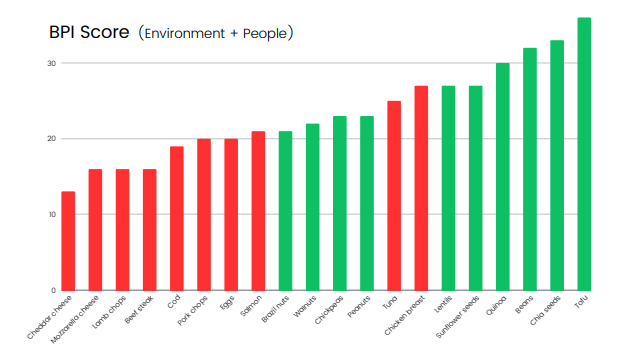
Tofu is the winner!!! So proclaimed everyone from the BBC to ProVeg after reading about the new BPI score. The score, created at Cambridge University’s Better Protein Institute, ranks proteins according to three factors: environmental impacts, healthfulness, and affordability. Why did tofu come out on the top? Tofu generates relatively little greenhouse gas emissions, is a complete source of protein, and is cheap. Cheddar cheese came in last, due to its substantive environmental impacts, high saturated fats and sodium, and price.
The Better Protein Institute was created by Dr. Chris Macdonald to “facilitate and accelerate the global transition toward the most beneficial sources of protein — for people and for the planet.” Tired of research showing environmental and health labels on foods and menus have little impact on people’s eating choices, Macdonald decided to ask people how they make decisions about meat eating. He found that the biggest barrier to reducing meat consumption among young people in the UK was their belief that meat is the only way to meet protein needs. So he reasoned, the BPI score, which can be used to create good and bad protein labels, would help people make informed choices about how to get the protein they felt was so important.
Taste was the second most important reason cited by people in Macdonald’s survey for not giving up meat. Unfortunately, tofu does not have a great reputation for taste.
“Tofu is probably the most maligned of all foods. People think it’s boring. But tofu is like a blank canvas. It takes on the flavor of whatever you cook it with.”
— Madhur Jaffrey
Of course, depending on how it’s prepared, tofu can taste good in addition to providing great protein content for the price. Take, for example, these 30 easy tofu recipes “tastier than meat.”
The BPI Runner Ups: Chia Seeds, Beans, and Quinoa
Let’s go to the runner up on the BPI score — chia seeds. Likely most people have not heard of chia seeds and if they have, don’t know how to cook with them. Chia seeds are tiny but they are packed with nutrients, including protein, antioxidants, minerals, fiber, and omega-3 fatty acids. Here are thirty chia seeds recipes.
Beans came in third on the BPI scale. Although perhaps not everyone’ s favorite source of protein, most of us are familiar with beans. But just in case, here are 48 bean recipes that are “satisfying and flavorful.”
I was a little disappointed that quinoa, at number 4, did not make it to the medal stand because I just wrote about its amazing protein profile and history. It turns out that quinoa would have been in the top three based on environmental impact, protein content, and other aspects of health. But the BPI scale also incorporates costs and quinoa is expensive in the UK, where the BPI was developed.
But, what if we could adjust the cost factor in the BPI to account for different prices in different countries? In fact, 100 g of quinoa costs about $0.47 in the US versus somewhere between $0.77 and $1.15 in the UK. Perhaps quinoa would be in the top three proteins for a US BPI. (Here are 33 recipes with quinoa to “power your days.”)
So My Point Is?: Meat Eating Can be Embedded Like a Tick
First, it doesn’t matter whether quinoa makes it to the top three. The results are clear. Plant sources of protein win out over cheese, beef, and lamb when we combine price, health, and environment.
Second, thank you Professor Macdonald for moving us a step further in trying to promote food that is healthy for people and the planet… and affordable. The demand side solution to food climate emissions — that is, reducing red meat consumption — seems to be just as difficult to tackle as supply side solutions like reducing cows’ enteric methane emissions. I love the fact that you tackled the problem from a novel perspective — people’s concern about getting enough protein. Not only the young people you surveyed in the UK, but also MAHA and testosterone proponents in the US are obsessed with getting enough protein.
But I am not clear how we move to the next step — getting more people to choose tofu, chia seeds, beans, or even quinoa as protein sources. In online experiments where “high protein” labels were added to meat substitutes, more university students chose the meat substitutes. But the meat substitutes in the experiment were not tofu or chia seeds — they were animal meat imitators like vegan sausage. And these were online choice experiments, not real life ordering in a restaurant or shopping at a grocery store.
Meat eating can seem inextricably embedded in our culture, not unlike a couple ticks I recently found embedded in my abdomen. I had to pry them out over and over again with tweezers. It was painful. By the time I got them out, I had a large red wound, dripping a little blood. Taking away the foods we love similarly seems to invoke a wound. As we have seen from political discourse like “Tofu Talarico” in the US, or “Guardian-reading, tofu-eating wokerati” in the UK, culture wars around food can be bloody at times.
(Interestingly, some people who suffer tick bites develop a life-threatening allergy to red meat called alpha-gal syndrome. Maybe the growing tick population will unwittingly become the solution to prying away our insatiable demand for beef!)
TAKE ACTION
Given how embedded eating habits are, one of the best ways to make a difference is to invite family and friends to try out new plant-rich recipes. ‘Network Climate Action” — that is engaging your close network of friends and family in a climate behavior — has been shown to spread behaviors that are difficult to change. If you can’t get together for a meal with your network on a regular basis, you can share recipes; my friend Eileen shares a weekly plant-rich recipe with her friends, who have started to share back.
This week’s actions are all about high protein recipes! I’ve only included recipes that combine two of the top four proteins. Try these out with family and friends. Let me know how it goes in the comments.
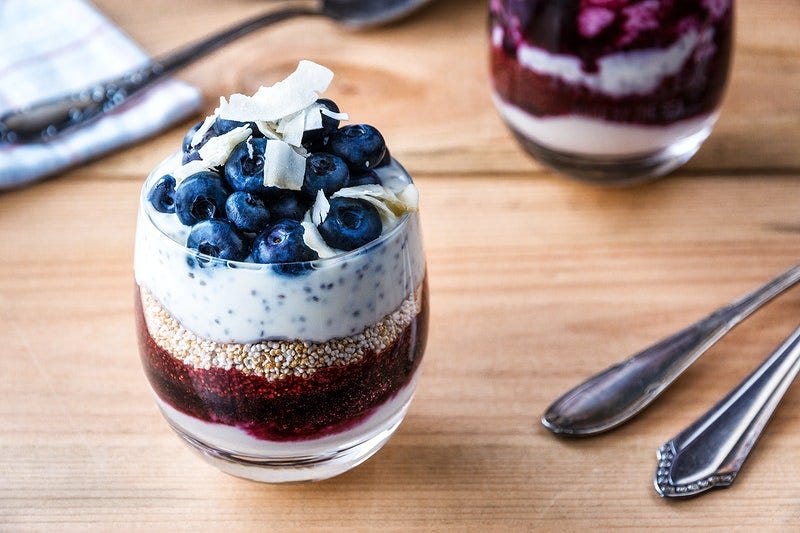
Vegan Chia Protein Pudding. This vegan chocolate pudding is a quick and healthy dessert recipe made with wholesome plant-based ingredients. In just 200 calories, each serving packs over 10 grams of proteins thanks to silken tofu, chia seeds, and almonds. Strawberries and bananas make this mousse naturally sweet with no need for added sugars.

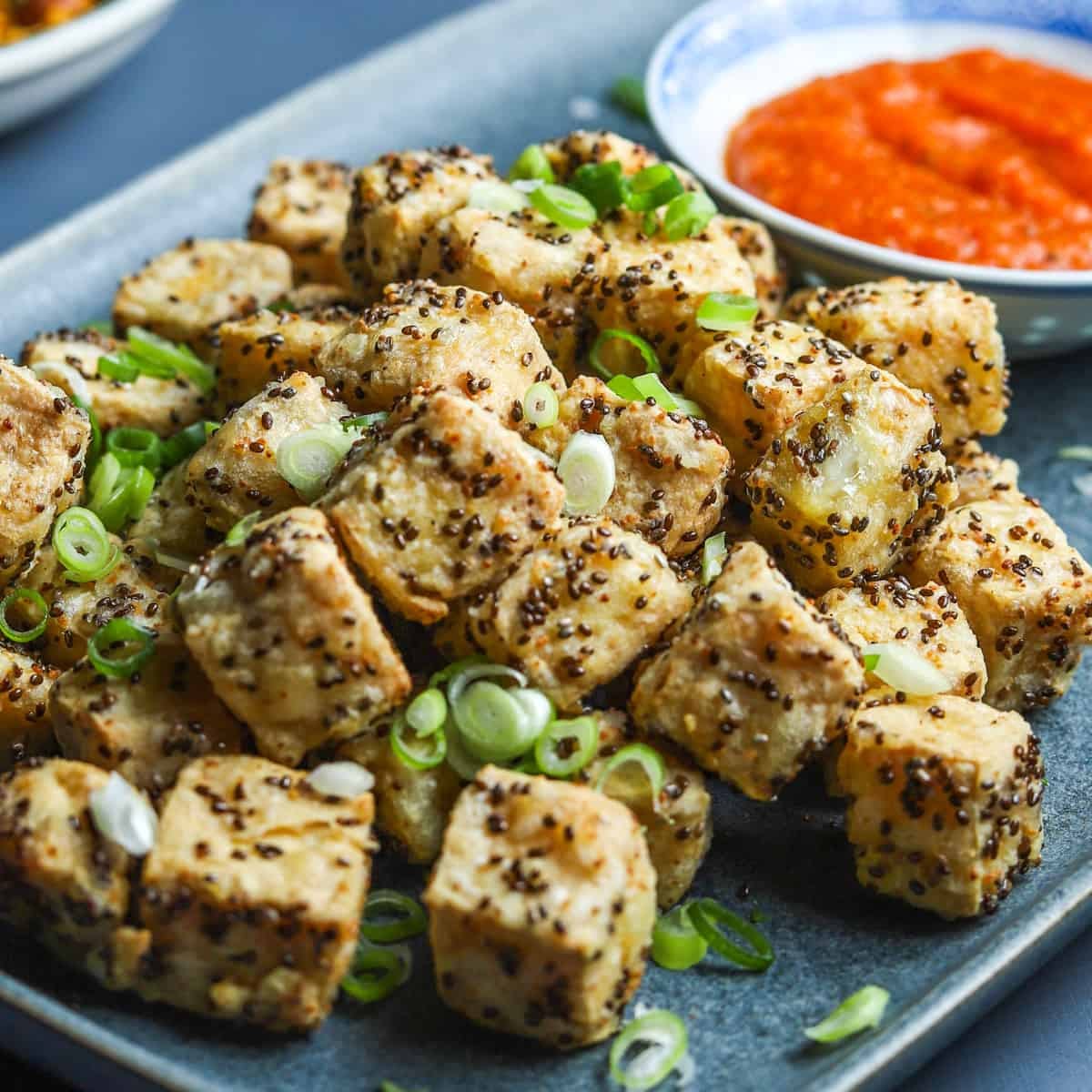
Crispy Air Fryer Tofu with Chia Seeds. As a fantastically healthy and versatile source of plant-based protein and taking only 10 minutes to make (with literally a minute prep time!), you’ll find yourself frequently making this crispy air fried tofu all the time! Use it in stir-fries and noodles or to add some protein to your salads or even as a pre-dinner canapé with a dipping sauce! (It can also be cooked in the oven if you don't have an air fryer.)
Quinoa and Black Beans. Quinoa and black beans make a flavorful vegan main or side, with nutty quinoa and a little heat — a great swap when you’re tired of black beans and rice.

7 Delicious Quinoa and Tofu Recipes to Try. If you’re looking to spice up your meals, try these 7 delicious quinoa and tofu recipes! You’ll love the comforting Tofu Quinoa Bowl paired with roasted veggies. The Thai Peanut Tofu Quinoa Bowl packs bold flavors, while the Crispy Balsamic version adds a tangy twist. For a quick weekday dinner, the Broccoli Tofu Stir Fry is perfect. Don’t miss out on the Sweet Potato and Tofu Quinoa Bowl—it’s both nutritious and customizable. There’s so much more to explore!

Leave a comment. Share your thoughts about these and other high protein, plant-based recipes.
Addendum: Four Recommendations for BPI Version 2
I can envision a lot of uses for the BPI but after writing them down, I realized they are more for Macdonald than for my readers. So I am including them as an addendum in case anyone is interested.
Macdonald acknowledges that his BPI score is just a beginning. The BPI score he just published is Version 1, to be improved upon. Here are my suggestions for version 2.
Make the cost factor interactive so that people can enter their local costs for a food they are considering, and convert local prices to cost per 100 g protein. Then compute a new BPI score for that location. This will be engaging for BPI score-curious and perhaps turn them into BPI score behavior-changers. Another possibility is to post different BPI scores for different countries.
Provide a link to recipes for the top four plant-based proteins. In this way, the BPI will provide not only “systems knowledge,” that is facts about foods, but also “action-related knowledge,” or how we can convert food facts to food action. Alongside protein, lack of cooking knowledge and uncertainty about taste are at the heart of people’s reluctance to eat more plant-based foods.
Once country-based costs are computed, the BPI score can be used not just by individuals but also by food system decision makers. For example, I could share the BPI score with my local hospital, school, university, or government agency staff who make decisions about what food is served.
Researchers and activists could also work with grocery stores to experiment with a protein aisle that includes both meat and non-meat protein. Tofu, chia seeds, beans and quinoa would appear alongside steak and cheddar cheese.
I truly love this posting you produced. There is if any efforts being done to teach this aspect of life. Believe me when I say that, I have spent my environmental career attempting to create the kind of messages needed, both verbal and visible to show what is missing in our low-income portions of the population that I serve.
Great information with great ideas for change! Hope the protein aisle catches on… I look forward to trying some of the recipes - thanks for sharing them!