
If you or your friends and family are interested in plant-rich eating but lack know-how about how to prepare plant-rich dishes, you are not alone. And if you are wondering how you can find the nutrients you need without eating meat, then I have resources for you. Here are six websites with nutrition tips and recipes to help you and others make the transition toward plant-rich eating. Please share sites you have found helpful in the comments.
by Marianne Krasny
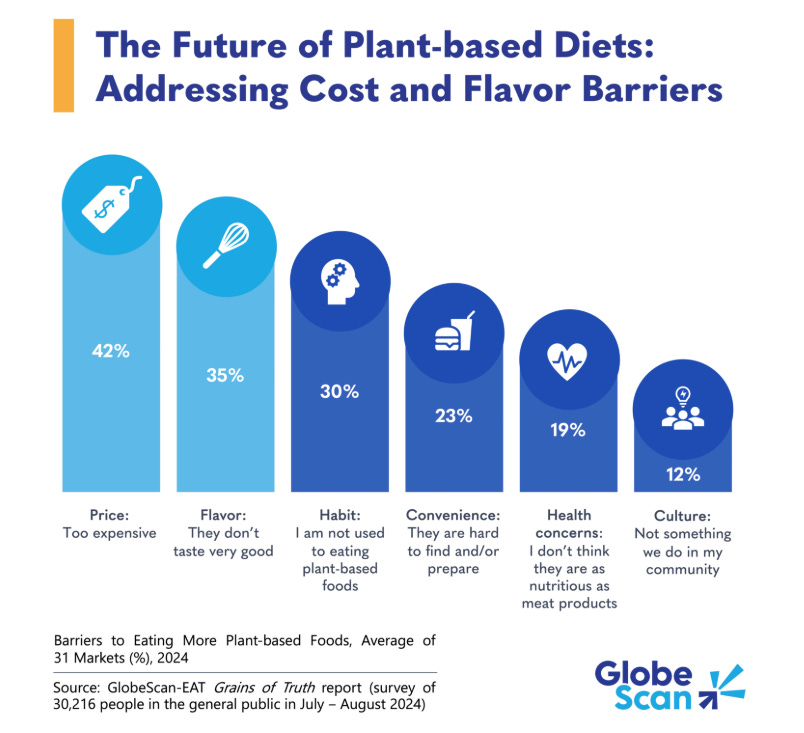
Across the globe, nearly 70% of people say they are interested in eating more plant-based foods, but only 20% are actually doing so. So what’s holding them up? Consumers often view plant-based diets as too expensive. They are wary of the taste and are hesitant to try something new, especially if they come from a meat-eating culture. Importantly, consumers have concerns about how healthy plant-based diets are and feel they lack the skills to prepare nutritious plant-based meals.
The desire for plant-based foods is evident. Across the globe, consumers are expressing an interest in reducing their consumption of animal products. While 68 percent of people globally say they are interested in eating more plant-based foods, only 20 percent regularly do so. Globe Scan
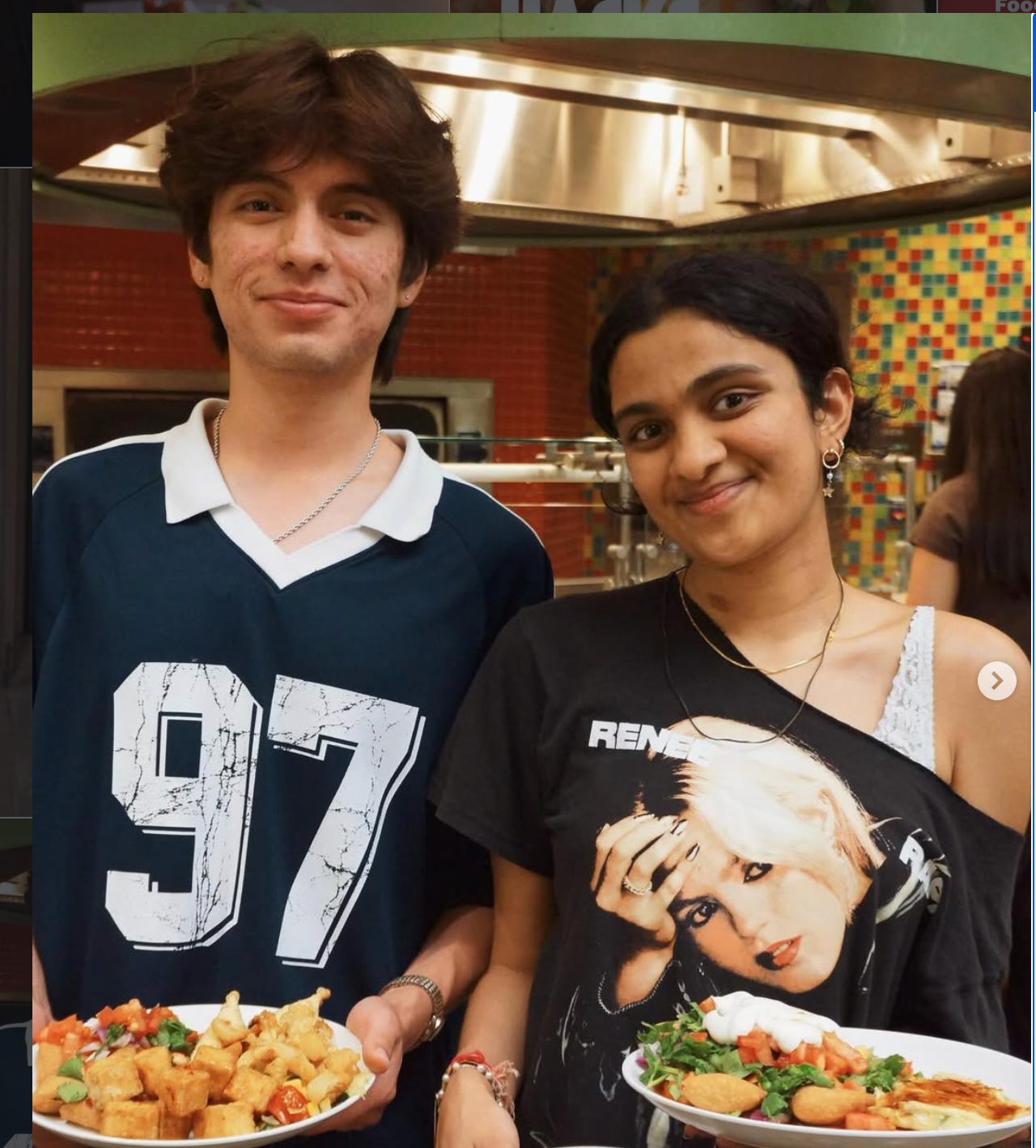
What helps people eat more plant-rich foods? Factors include information about nutrition and recipes, along with support from family and friends. Here are six reputable sources about plant-rich diet nutrition and cooking. Preparing plant-rich meals with friends and loved ones can provide the needed support.
Mayo Clinic
With planning, a vegetarian diet can meet the needs of people of all ages, as well as people who are pregnant or breastfeeding. Mayo Clinic
I was excited to see the highly reputable and trusted Mayo Clinic’s repertoire of plant-rich diet resources. Perhaps most useful is the list of essential nutrients — B12, calcium, and omega 3 fatty acids among others — and where you can find them in plant-based foods. As a “90% vegan” (I eat vegan when cooking for myself but will eat dairy when others cook for me), I like to revisit the Mayo Clinic site from time to time to make sure I am getting all the nutrients I need.
The Mayo Clinic offers three tips for getting started on more plant-based eating:
Ramp up (increase the number of meatless meals you already like).
Substitute (try favorite recipes without meat).
Branch out (get ideas and information from the internet, cookbooks, restaurants and friends).
Other Mayo Clinic resources include a short article on How to start a plant-based diet, which includes guidelines on how to get enough protein. Meatless meals: the benefits of eating less meat recommends that if you don’t want to give up meat entirely you should “flex for your heath.” A flexitarian eats mostly-plant based foods, but occasionally eats meat, poultry and fish. Importantly, “meat is not the star of the meal.” The site goes on to say:
This kind of healthy eating is key to the Mediterranean diet. It’s also key to other cuisines, such as some Asian, Ethiopian, Indian and Middle Eastern diets. These diets limit red meat. And they focus on fruits, vegetables, beans, peas, lentils, nuts, whole grains and healthy fat. This type of diet has been shown to lower the risk of heart disease and other chronic conditions. Why not work on your flexibility and start enjoying some healthy benefits?
Last but not least, the Mayo Clinic’s “Vegetarian” Meal Plan is a paid subscription to a 6-week plan that delivers “hunger-busting protein from beans, soy, eggs, and dairy.”
Kaiser-Permanente
Another trusted source of health information is Kaiser-Permanente. The Plant-Based Diet: a Healthier Way to Eat booklet presents a low-fat, whole foods, plant-based diet as a way to lose weight, feel better, treat chronic conditions like heart disease and diabetes, and reduce medications. It also includes information on how to get required nutrients and meal recommendations.
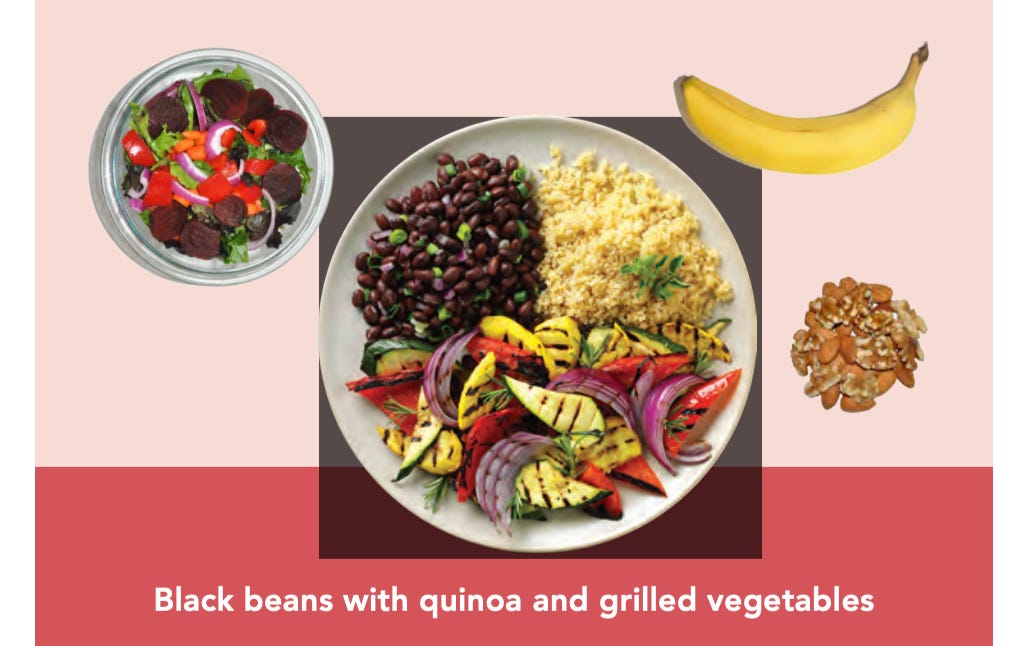
Kaiser-Permanente recommends the “plate method:” Fill ¼ of your lunch or dinner plate with non-starchy vegetables, ¼ with a healthy grain or starchy vegetable, ¼ with plant-based protein, and add a salad, fruit, and nuts.
Physicians Committee for Responsible Medicine
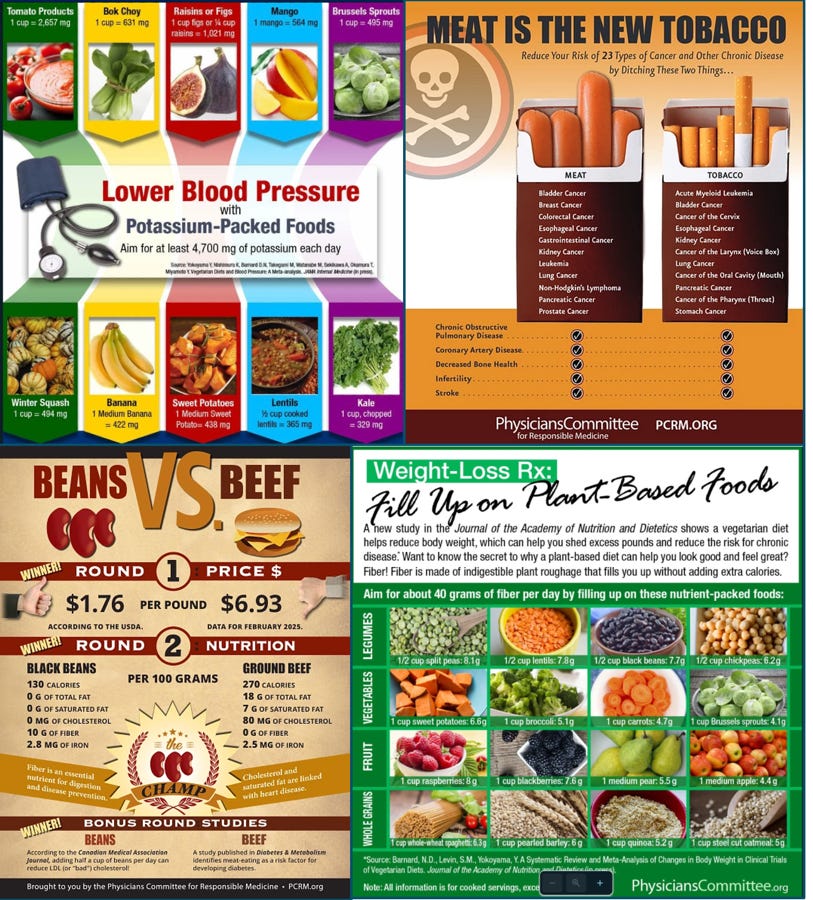
The Physicians Committee is dedicated to “saving and improving human and animal lives through plant-based diets and ethical and effective scientific research.” Its nutrition resources are impressive. For example, the “Power Up With Plant-Based Protein” page goes over how much protein you need, links to a youtube video titled “Protein Overload?”, and includes a fact sheet called “The Protein Myth.” Jumping over to its Omega 3 page, I found out how to get essential fatty acids from plant-foods, alongside recipes and a fact sheet labeled “Health Concerns about Fish.” The “Carbohydrate Advantage” page goes over good and bad carbs, and includes a weight loss video along with a fact sheet on Ketogenic Diets. Other resources talk about nutrition for athletes, pregnancy, and kids. And the “Good Nutrition Vegan Starter Kit” lays out practical tips for beginning a plant-based diet, frequently asked questions, delicious low-fat recipes, alongside resources to help you maintain your plant-based journey.
I had fun exploring the Physicians Committee’s wide range of infographics, which you can download for free.
Forks Over Knives
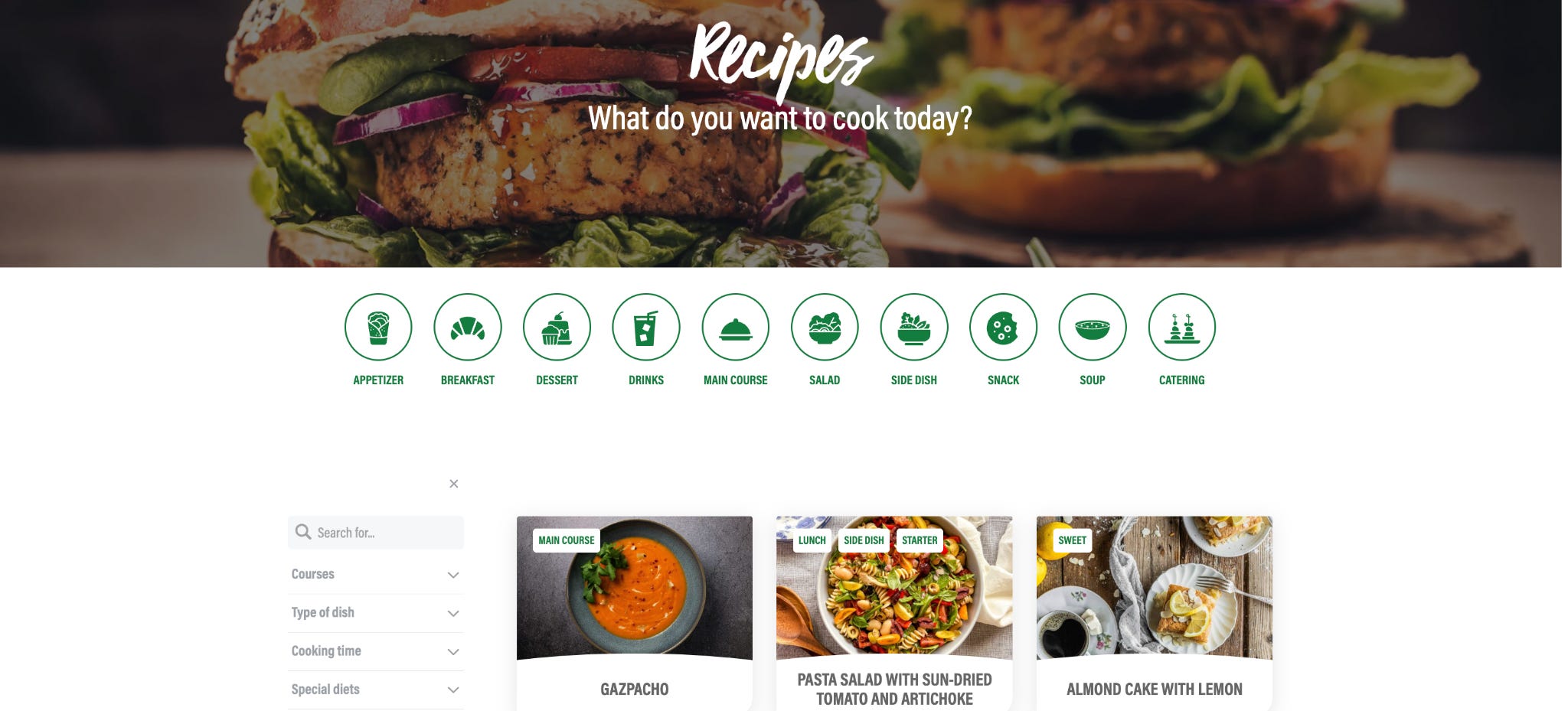
Forks Over Knives offers a wealth of resources linking plant-rich eating to health. What I liked about their site was the wealth of recipes, organized in categories like “38 Romantic Recipes for Breakfast, Dinner, and Dessert” and “26 Recipes You Probably Already Have the Ingredients For.”
Browse and search hundreds of delicious, easy-to-prepare recipes for a whole-food, plant-based diet. All of our recipes are developed, tested, and perfected by professional chefs. Each printable recipe includes ingredient lists, simple instructions, and tips to make plant-based cooking a joy. Forks Over Knives
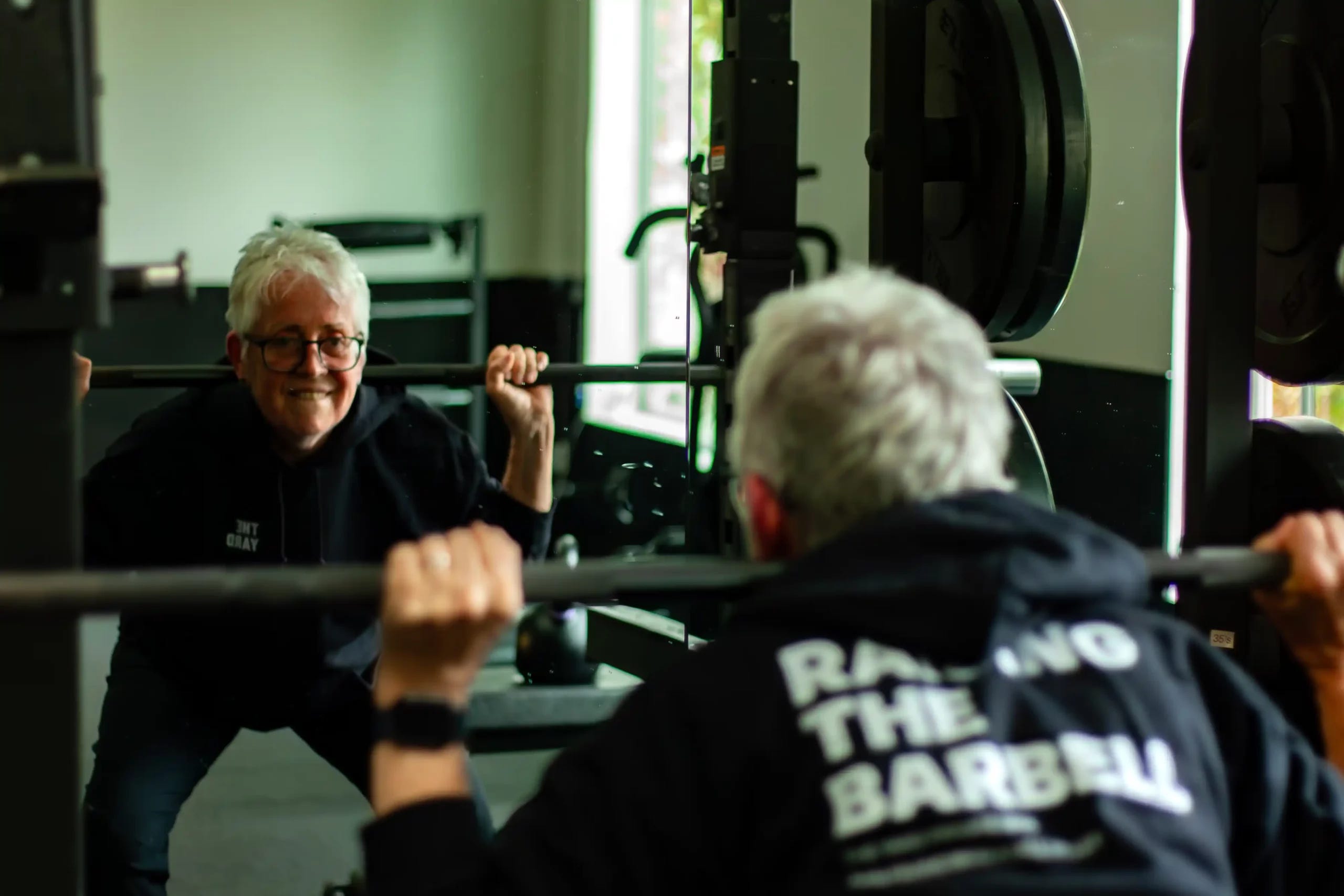
What I liked even more were Forks Over Knives’s “Success Stories.” My favorite story was the 72 year old vegan nun who can power lift her body weight. Younger readers might enjoy At 28 Years Old, I Was on Nearly 10 Medications. Then I Changed My Diet.
ProVeg International
I know ProVeg from their LinkedIn posts, which share updates on government policies and grocery store practices supporting the plant-based diet transition. Some recent updates: grocery chain Lidl launched a line of hybrid meat-pea protein products that have 20% more protein than their traditional meat counterparts; Carrefour Belgium plans a 50/50 split between plant-based and animal-based proteins by 2030; and that schools in England will serve pulses weekly starting in 2027. Whereas the posts focus mainly on European policies, they are useful for envisioning what the food industry and government might do in other countries.
In fact ProVeg is largely an advocacy site — sharing why it’s important to go vegan and how policies can get us there. Their Five Reasons to go vegan — taste, justice, health, animal welfare, and environment — can be useful in explaining to friends, families, policy makers, schools, hospitals, and grocery store executives why you would like to see more support for plant-rich diets.
ProVeg’s “Veggie Challenge’ is an app with over 500,000 participants, which encourages people to eat a plant-based diet for 30 days. The Veggie Challenge Teams app is for companies that want to collectively embark on the transition to plant-based foods with their employees.
Planetary Health Diets and their Impacts Dashboard
Unlike the other sites the Dashboard doesn’t include recipes or guidelines for adopting a plant-rich diet. Rather it allows you to visualise how different diets — ranging from flexitarian to vegan — impact nutrition, health, and the environment.
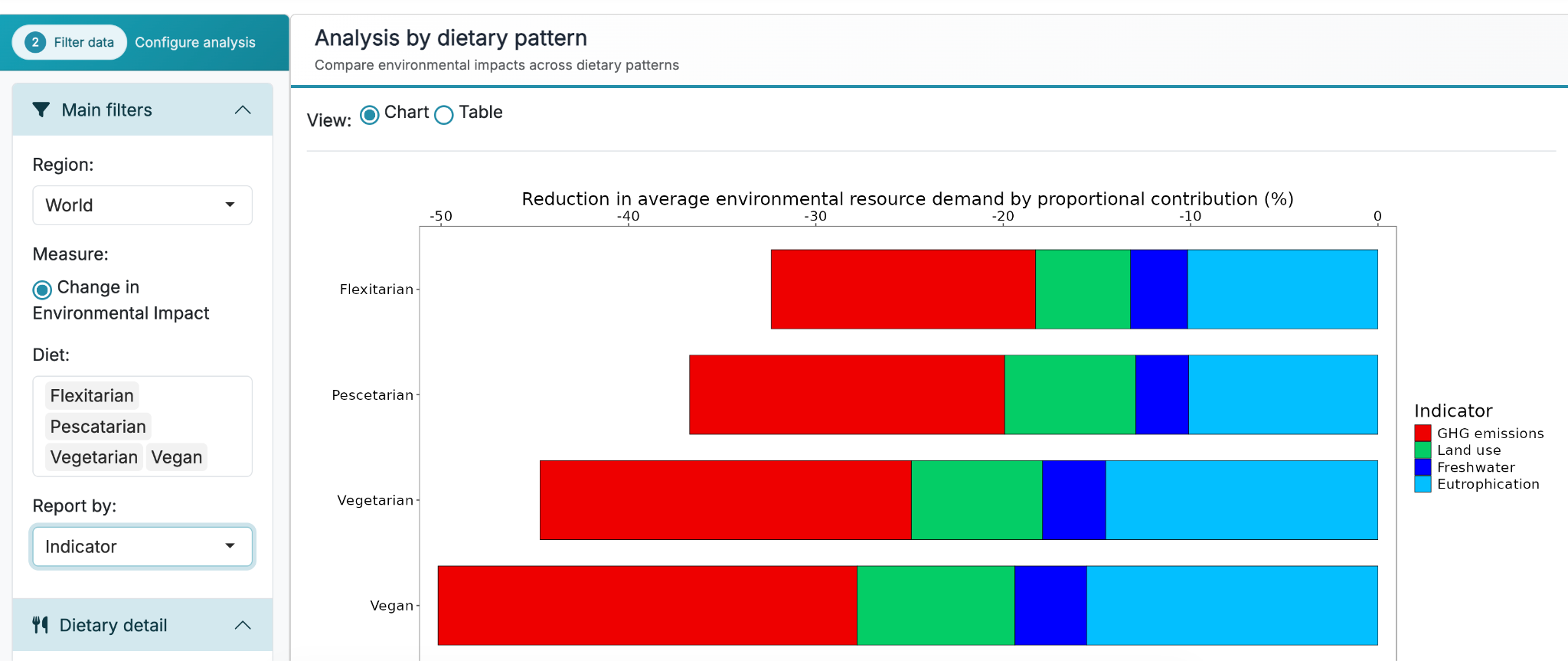
I found this chart a little hard to figure out but a short explanation in the upper right gave me some clues: “Compare environmental impacts of current diets (Baseline) to planetary health diets (Flexitarian, Pescetarian, Vegetarian, Vegan).” Looking carefully at the graph, you can see that 0 is in the top right, which is the baseline — that is our current average diet — to which the other diets are compared. The colors represent different environmental impacts, which are explained in the legend. A flexitarian diet reduces combined environmental impacts by a little over 30%, whereas a vegan diet reduces that impact by about 50%. Whereas the four diets have similar impacts on reducing freshwater use (in purple), their impact on reducing climate emissions varies significantly (in red).
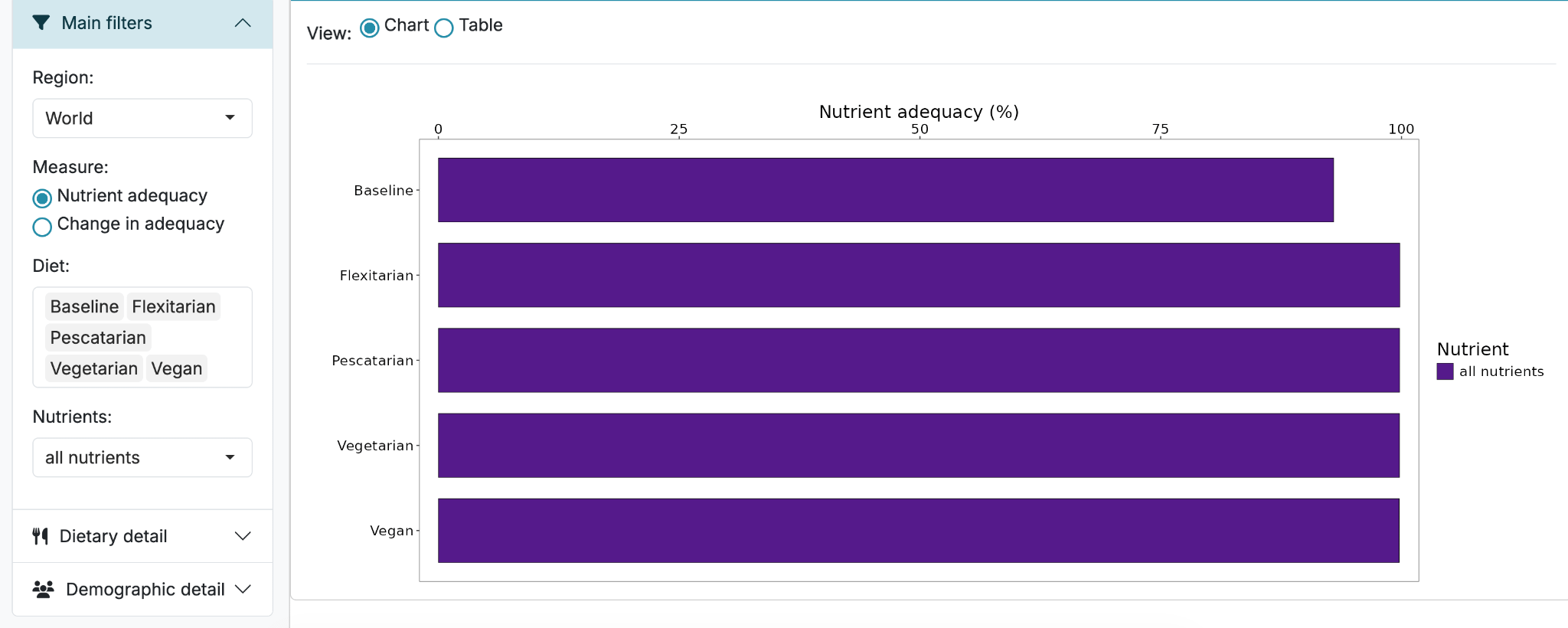
This chart was a lot simpler. It basically shows that you can reach nutritional requirements with all four “planetary health” diets but not with our baseline or normal diet.

TAKE ACTION
Do you know of other plant-rich eating websites? Our actiomn thare your favorite plant-rich eating resources with friends, family, policy makers, and with our Food, Farms, and Climate Substack community.
I would love to learn about the plant-rich resources you are using as you transition to a healthy diet rich in plant-based foods (or if you simply substitute one plant-based meal a week for a meat dish). Please share a link to your favorite resource along with a short explanation of why the resource is helpful in the Comments.
Share a plant-rich resource in the Comments.
Thank you! I have been vegetarian for years and appreciate your sharing the information
Excellent information, Marianne! I appreciate the variety of topics you're bringing to readers, and what goes into our daily diets is an interesting and important one!.
My SF Peninsula acquaintance and SOUL Food Salon founder Dr. Jeanne Rosner has just released "More Plants, More Flavor: An Invitation to Cook, Gather and Enjoy Simple Plant-Rich Recipes," with nearly 70 recipes and photos that highlight the color that plants bring to our plates. In the book and her practice, Rosner encourages us to incorporate 30 different plant-sourced foods into our diets each week. I encourage everyone to check out the book, available on Amazon (and possibly other online bookstores). And a special note about it: all profits from the book will be donated to Jose Andres's World Central Kitchen.
Ditto Anna Barker--bon appetit!