
[We envision] a future where edible surplus food recovery is a cornerstone of every community’s approach to food and nutrition security, environmental stewardship, and economic vitality. National Food Recovery Association
Given that Congress seems intent on cutting back SNAP food benefits, we need to look elsewhere to feed hungry Americans. This is where food recovery comes in. Recovering the 30-40% of our food we waste each year can not only help feed the hungry. It can also save money and our environment.
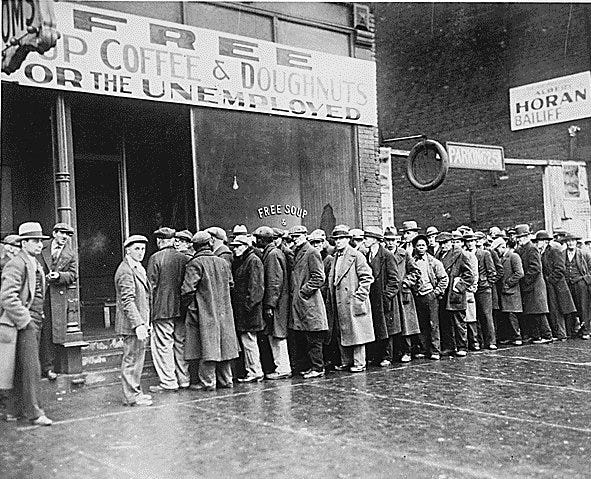
Soup kitchens, food banks, and food recovery nonprofits all play a role in making sure surplus food gets to people who need it. In this article, I explore their history, how they are making a difference today, and what we can do to strengthen them.
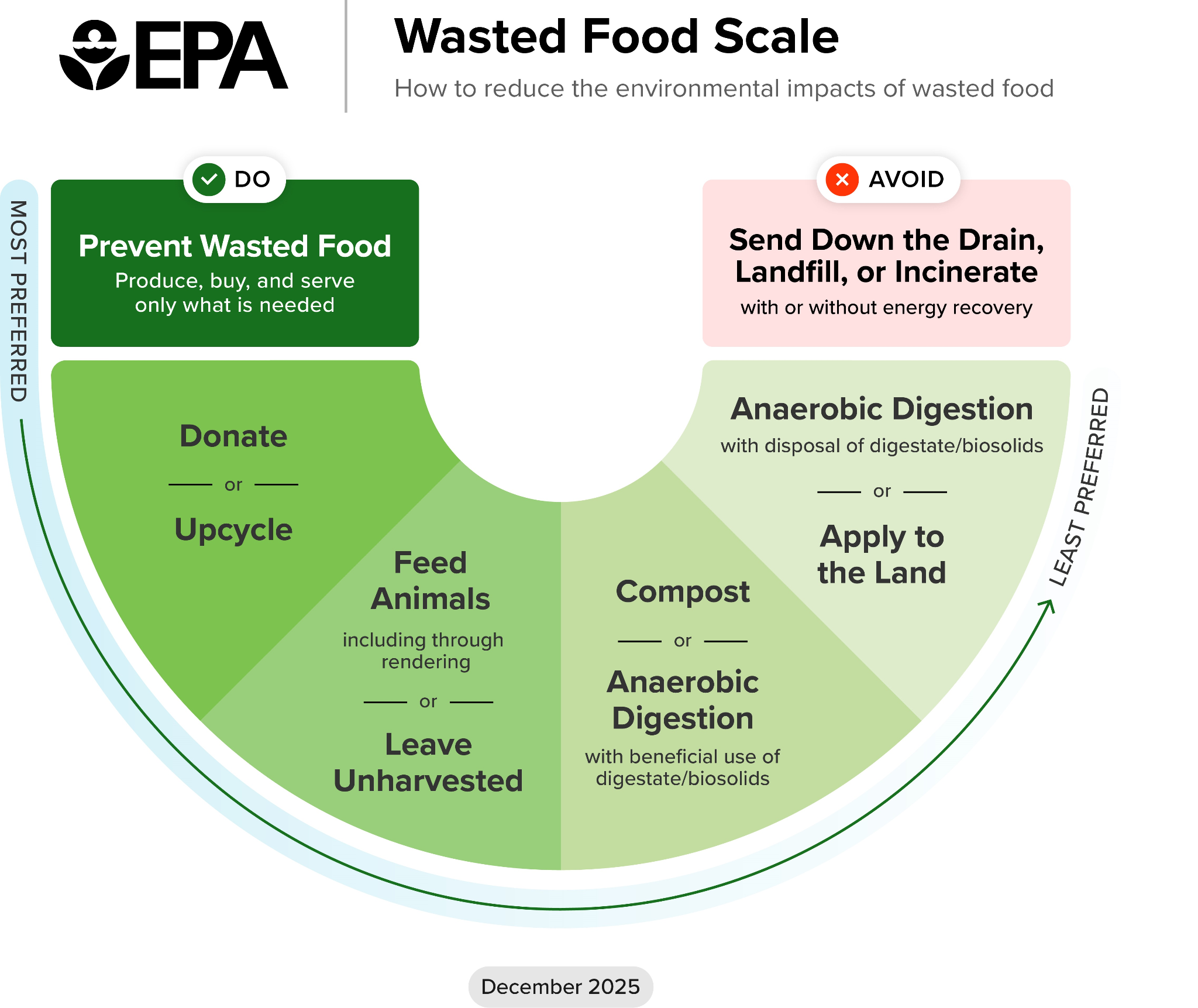
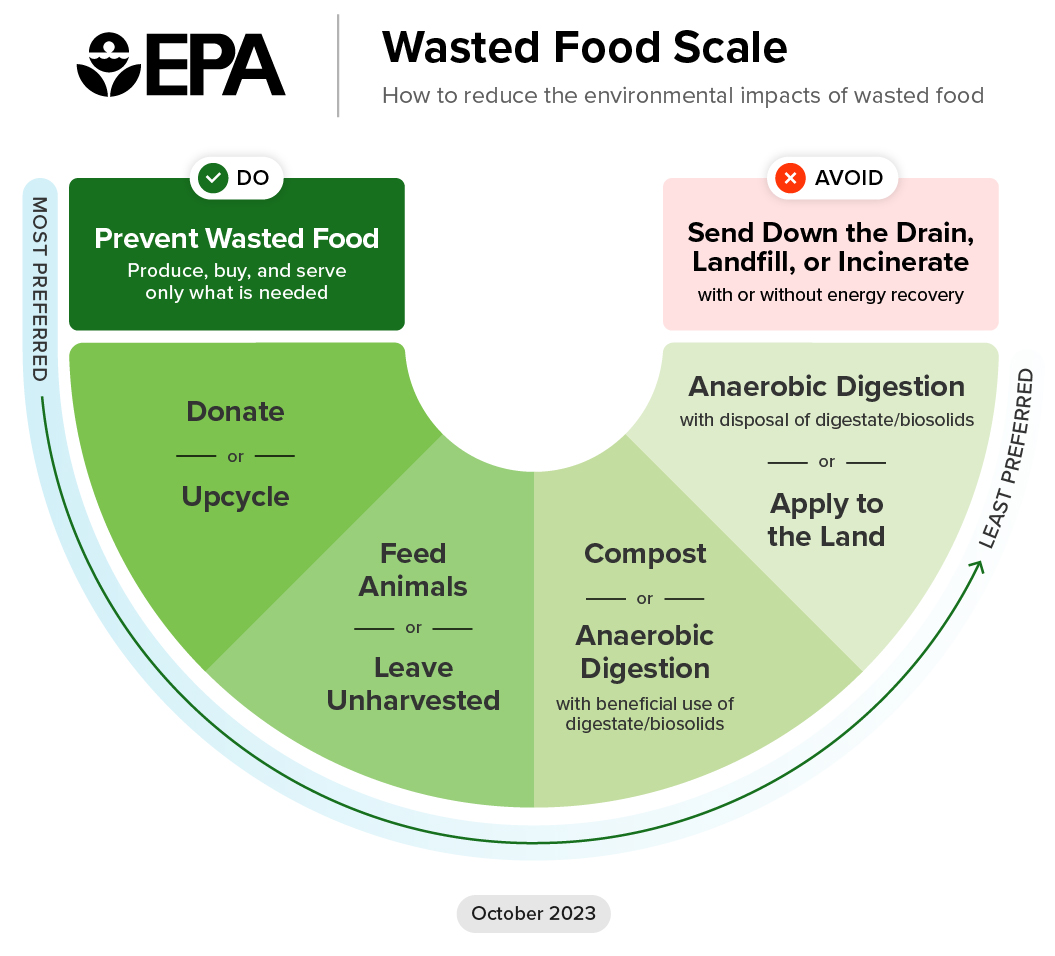
The most effective way to reduce food waste is to avoid creating it in the first place – whether by buying less food, taking smaller portions, or donating safe and edible food to others who can make use of it. Frontier Group
Food Donations in History
Soup kitchens date back to at least the 13th century, when Takiat Ibrahim opened its doors in the ancient city of Hebron (now located in the contested West Bank). A 16th-century chronicler described how each day after the afternoon prayers, drums announced the time for locals and travelers to gather at Takiat Ibrahim to receive food. He estimated the soup kitchen gave out 14,000-15,000 loaves of bread daily, and called it “one of the wonders of this world.” Takiat Ibrahim still serves the hungry in the West Bank today.
The first soup kitchens in the US were established during the depression. The need for hunger relief ebbed when the economy improved after the Second World War, but spiked after President Reagan scaled back welfare programs in the 1980s. Grassroots hunger relief organizations rushed to fill the gaps in our food system. Over 90% of food banks, about 80% of emergency food kitchens, and all known food rescue organizations in the US as of 2002 were established in the 20 years after Reagan took office.
Food Relief Today
Today, different organizations fill different hunger relief roles. Soup kitchens prepare meals for the hungry daily or several times a week. Food banks warehouse and sort food staples and surplus government commodities, and then distribute the food to soup kitchens, churches, low-income housing, and other institutions that feed the needy. More nimble food recovery organizations pick up perishables from hotels, restaurants, distributors, and grocery stores, and quickly distribute the fresh food to organizations that feed the poor as well as in novel locations like pop-up grocery stores.
Most of these organizations rely heavily on volunteers, who are motivated by charitable and other reasons. I asked one of my friends why she volunteered at food waste organizations where I live in Ithaca, NY.
It’s a very good feeling to know that I’m doing something worthwhile that benefits others. Also, I enjoy doing these things—the camaraderie with others who are helping, the chance to meet people outside my usual circles. Why hunger relief in particular? I guess because having enough healthy food is about the most basic need there is. Food relief volunteer
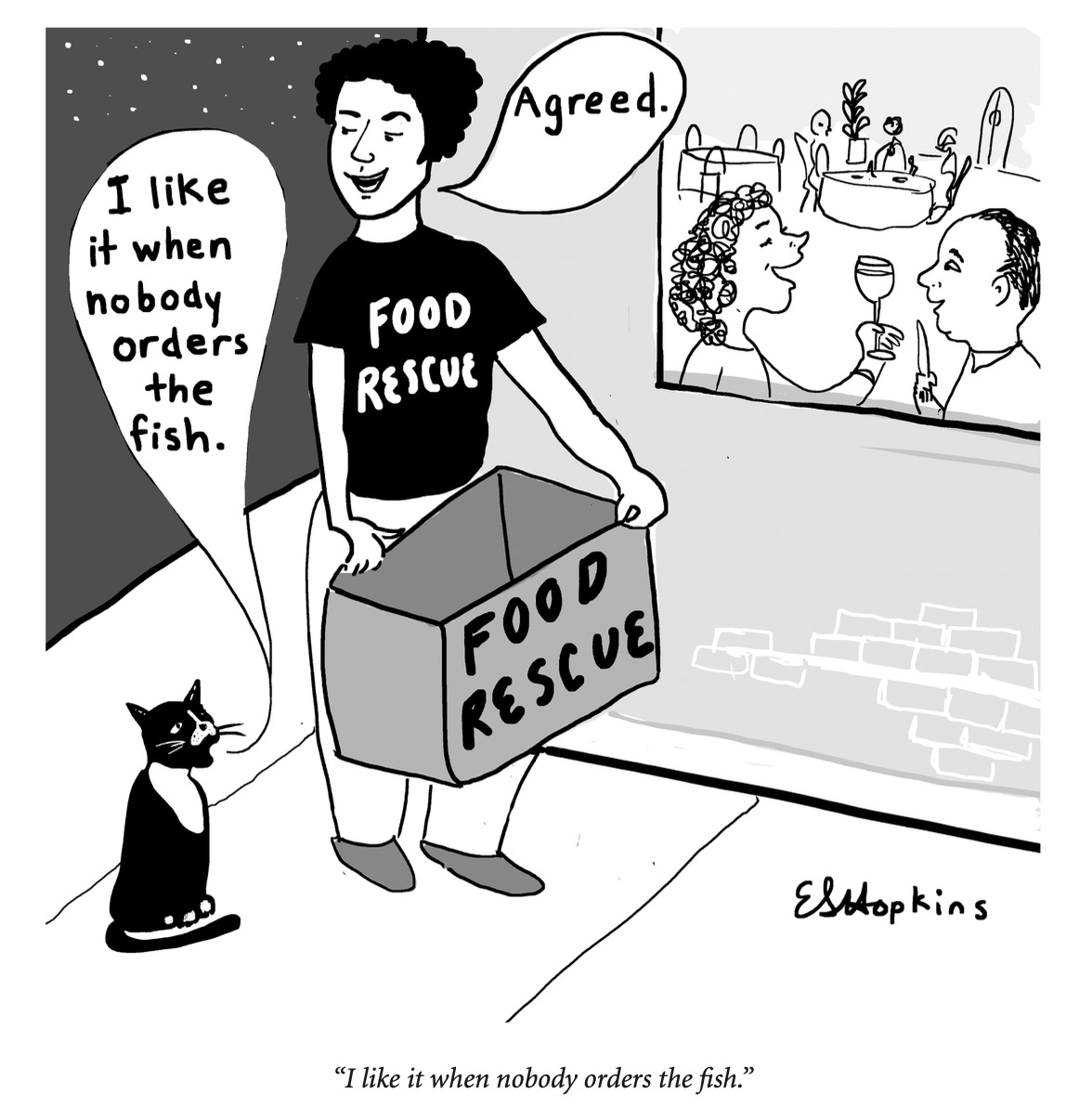
I also volunteered briefly with our local nonprofit Friendship Donations Network. When I pulled up to the loading dock behind our local grocery store, I was aghast at the boxes upon boxes of bread, fruit, and prepared meals that could have been sold just the day before, but now were left for the volunteers to transport to our town’s food distribution center.
Food Waste and the Environment
Whereas my friend volunteers to help her neighbors, the environmental impact of our massive food waste motivated me to volunteer. We use 22% of our fresh water and 16% of our cropland to produce food that never reaches our plates. Globally, food waste is responsible for 6-8% of total climate emissions, equal to the emissions of about 3.3 billion cars. Food waste is also the most common material landfilled and incinerated in the US.
How does food waste contribute to the climate crisis? First, all food that is wasted is grown on land that has been converted from forest or grasslands to farms. When land is cleared for farming, the carbon that was stored in the plants and soils is released into the atmosphere. If that land were to be converted back into forests or grasslands, carbon could be sequestered and stored. Second, when food waste ends up in landfills, it decomposes anaerobically and releases methane. According to the Global FoodBanking Network, by recovering surplus food that might otherwise end up in a landfill, about 1.8 billion kilograms of CO2e are never released into the air each year.
From Soup Kitchen Volunteers to a Food Recovery Industry
Second Servings in Houston TX demonstrates the impact of food recovery. Each year, it recovers over $30 million worth of surplus food that helps nourish 325,000 struggling Houstonians through 150 local nonprofits. According to its founder and president pro bono Barbara Bronstein, “We have cheated the landfill of over 21 million pounds of food during our first 11 years. We have also been very efficient, delivering over $40 worth of food for every dollar we spent.”
Recovering More Food. Yet a mere 2.5% of our surplus food was donated by grocery stores and restaurants in 2024. Because fresh fruits and vegetables spoil quickly, most food donations are staples like canned beans and rice. Getting fresh food to the needy is not easy. Food recovery nonprofits need to know when grocery stores and restaurants have excess food. They then need to make sure reliable volunteers are ready to transport the food to a warehouse. The warehouse has to have the capacity to store food safely in refrigerators. Finally, food banks need to coordinate with soup kitchens, churches and other organizations that serve food-insecure families. Of all these challenges, timely, reliable transportation is the most important.
Could we recover 99% instead of 2.5% of our surplus food? Fyffes is a major tropical fruit importer. It partnered with the nonprofit Sharing Excess to prevent food waste at ports in the US. As a result, less than 1% of its excess food is composted or ends up in the landfill, with over 99% going to donations.
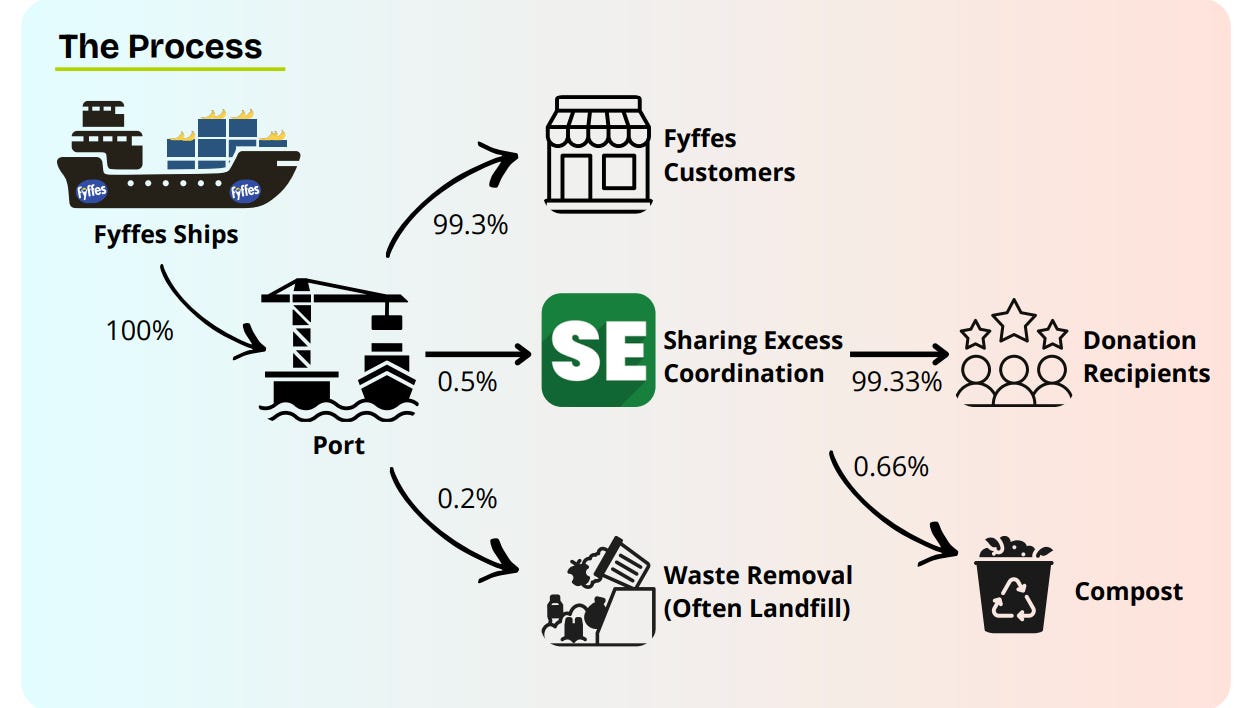
State and Federal Policies. Although achieving 99% food recovery may seem like a far-off goal, many pieces are falling in place to help us get there. States like California and Massachusetts have implemented laws banning businesses and homes from sending food waste to the landfill.
After California’s SB1383 food waste ban was passed, food banks received more donations. But only those food banks that got funding from CALRecycle and local government were able to transport, store, and get the food to those who need it.
After Massachusetts implemented its food waste ban, donations to food rescue organizations grew 93%. Despite this huge increase, food rescue organizations recovered just 7% of the state’s diverted food waste. Ten times as much, 70%, went to anaerobic digesters to produce energy and fertilizer.
To shift the balance toward feeding more people, we need funding to build the capacity of food relief nonprofits to transport, store, and distribute surplus food. For businesses like grocery stores and workplace cafeterias, we need federal and state tax incentives for donating surplus food. We also need to let businesses donating food know that they are protected from lawsuits by the federal Bill Emerson Good Samaritan Food Donation Act and similar liability protection laws in all 50 states and Washington, DC.
We don’t have a food shortage. We have a food system failure. Every day perfectly nutritious food is being thrown away, while families skip meals, children go to school hungry, and seniors forgo their meds. Barbara Bronstein, Founder and President pro bono, Second Servings
Business Initiatives. The private sector is also playing a role. Trader Joe’s Neighborhood Shares program donates 100% of unsold, edible food to local non-profits, nearly 80% of which is dairy, eggs, baked goods, and entrees such as salads, sandwiches and soups. Whole Foods’ Nourishing Our Neighborhoods funds the purchase of refrigerated vans so food-recovery organizations can transport fresh, healthy food back to their communities. You can check if your local grocery store has a food donation program.
Food Relief National Networks. Finally, national networks, like Feeding America, ReFED, Food Recovery Network, and Faith Fights Food Waste, support the myriad local food relief organizations. The Food Rescue Locator matches donors with food recovery nonprofits. The recently formed National Food Recovery Association (NRFA) helps educate businesses and provides resources for nonprofits. It also:
By fostering collaboration and supporting organizations of all sizes, NFRA aims to create a well-connected field that elevates the voices of food recovery experts to define industry standards and influence a supportive regulatory frame. National Food Recovery Association
We are on our way to realizing NRFA’s vision making surplus food recovery an even more vital part of our food system through strong legislation, food donor businesses, local food recovery nonprofits, and national networks. We can all play a role in making this happen.

We have volunteered for the last two years at our small city’s food distribution hub, the Rancho Cordova Community Food Hub. It has been a rewarding experience, as we have met many new friends and neighbors. We serve about 5000 people who are food-insecure with our volunteer group of about 400. Our community is very diverse, and has a large refuge population from the Middle East, Afghanistan, and Ukraine. Our volunteers range from high school students to octogenarians (which we are approaching ourselves).